You are barely alive and have barely lived
Look out mountain, look out sea!
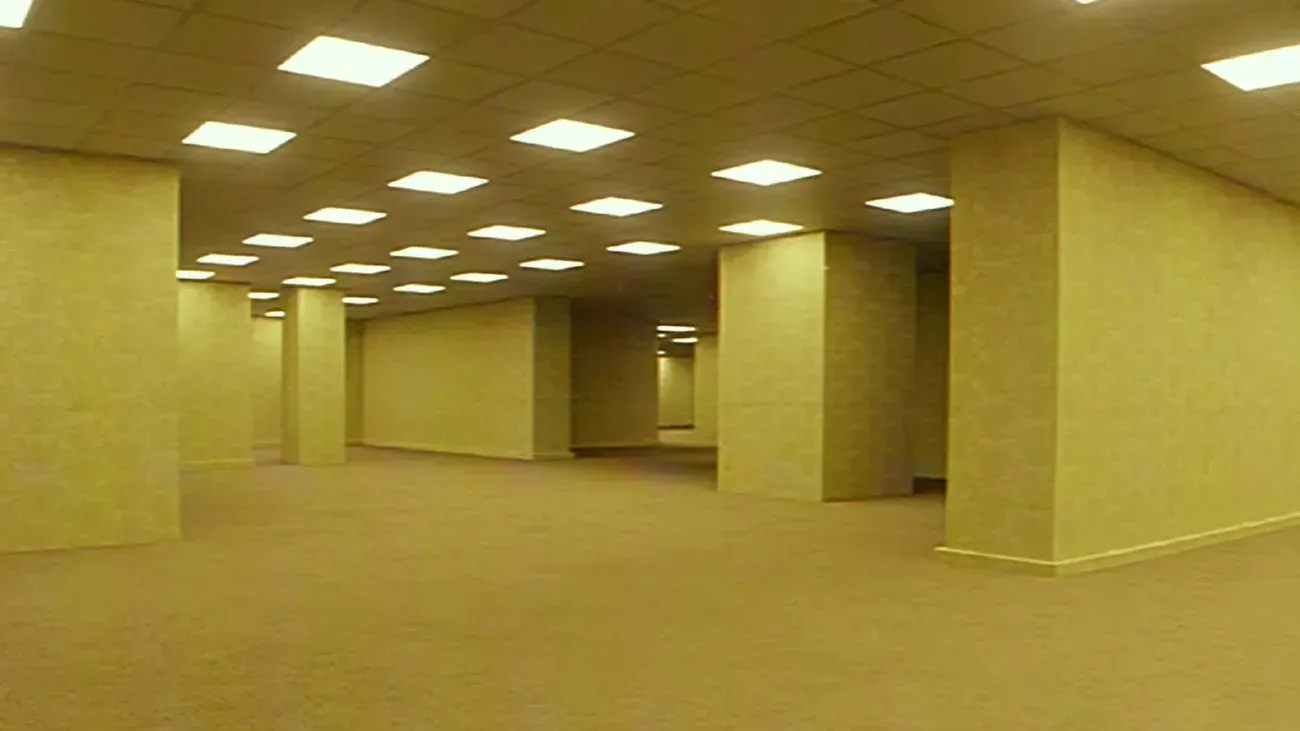
Most people associate seasonal affective disorder with fall and winter but for me it happens during summer, ironic because according to an unscientific ayurvedic body type quiz I took I have a balanced temperament and thrive in the summer, when heat and light fuel my spirit.
An unexpected thing that happened since I last wrote something with paragraphs in it is I saw Backrooms in theaters twice. I’m not even sure if I liked it that much but it struck a nerve. The second time I saw it (for the inessential 15-minute post-credit sequence) I thought it was slow and the script and logic flaws were obvious in the sunlight but it has an emotional register that left me bummed out as I walked out of the theater. This is an achievement. The sub-genre of Feel Bad movies that aren’t nihilistic or caustic but send you off alone with your thoughts for an indifferent stroll outside is small but affecting.
I read about billy woods’s mountains of notebooks with handwritten lyrics in them and thought “ok I need my version of that.” So I bought a $350 no-internet keyboard to write but it felt cheap in my hands and arrived seemingly broken; I returned it and was unburdened.
I know when I am scraping the bottom of the barrel for inspiration when I “go back” to voices I grew up on. I stumbled on a 2008 interview from someone I finally decided I admire more than I look up to or want to emulate. It took almost two decades to come to this conclusion, but it harms no one to look at the brass tacks and decide, no heroes for me.
Halfway through the interview I thought, they are putting into words how I feel about Backrooms. The crash of the boomer generation and their wealth hoarding that will starve millions was foretold decades ago. If this was Tumblr I’d quote it at length and be like, ah yes, here’s the truth. That feels less available in the age of the email newsletter when every new inbox ping comes with “in this essay I will”-ass energy. How do we revive the wild west of 2010 Tumblr in 2026?
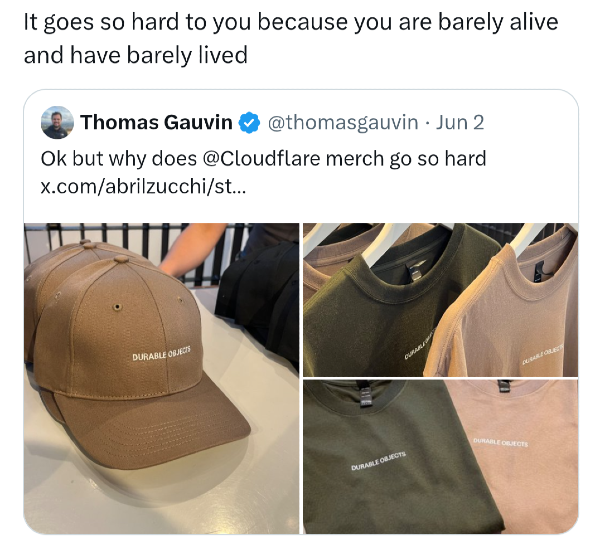
The first time I saw Backrooms, I thought about a tweet I had seen a few days before. A few days later, I read two essays (not about Backrooms) that were set into motion via quote-tweet and I thought, how embarrassing it is to be a writer. Yet the words want to come. Sometimes they come to me at work on my 24” screen. I thought they would come to me if I closed my eyes and typed onto a plastic monolith. I read these words below and they took the words out of my mouth.
Millennials like myself thought we could change things from inside the lines. People younger than us inherit no lines. I once read (ok I heard on a podcast) Hannibal Lecter persists because he was the last archetype of the modern world: the bourgeois devil. The well-read monster. That’s not true anymore; now there are no monsters. The newest, scariest thing in the world is the sense that we once had something and lost it, it can never be found again, and we are doomed to repeat our mistakes inside a dead-mall hell made out of yellow walls.
Here are my thoughts on Backrooms and what there is or is not to look forward to, spoken through the megaphone of someone who passed away in 2019, wheat-pasted on a telephone pole:
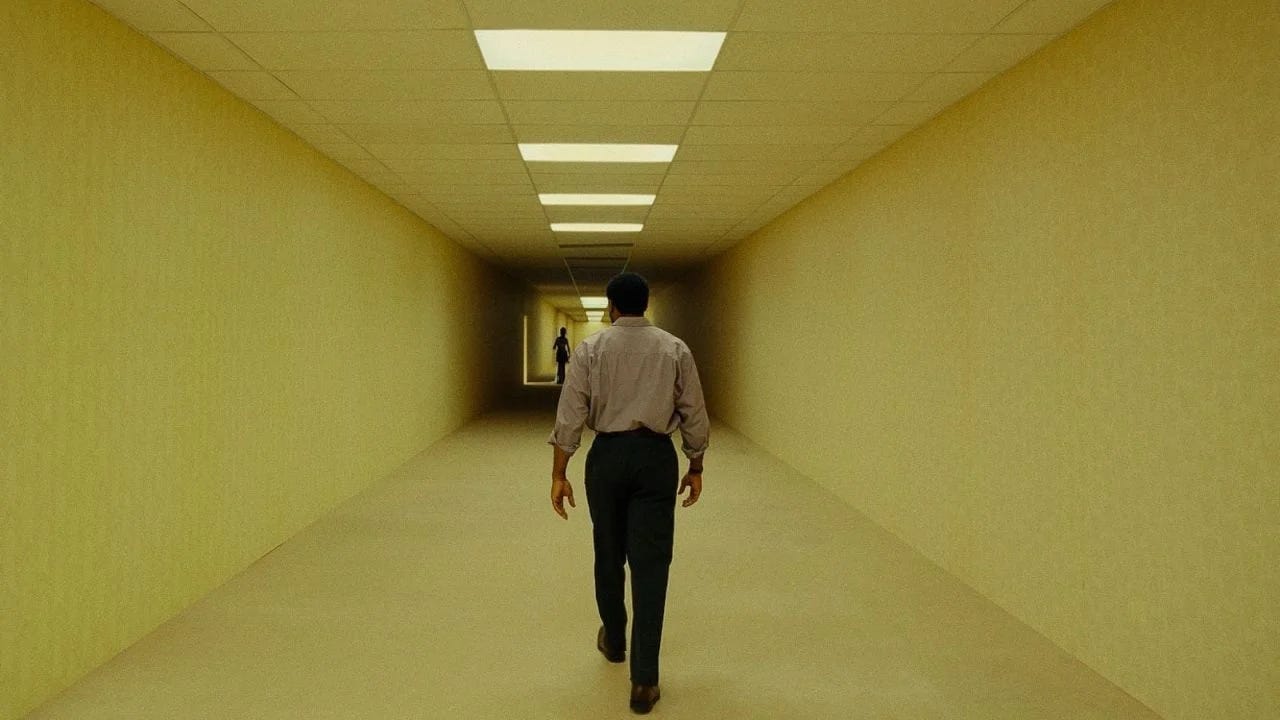
We have new old people and there's something sinister about them. They don't have any shame about forgoing long-term planning for society. The people who inherit what comes next—people my age [note: speaker was 41 when this interview took place]—will be in their 50s trying to clean up this mess. People younger than me are going to have to spend their lives doing that work.
In the 80s, the Reagans tried to recreate that American nuclear family, while all us Dead Kennedys fans knew it was a bunch of bullshit that everybody else just agreed to believe. Society was starting to prep their children. It was like the parents who grew up when America was exploring its own adult boundaries, they've grown up, and they have kids now, and they don't let their kids live like that. They don't let them go wherever they want on their bikes.
Younger people today have a real and strong and rooted attachment to our culture. When September 11 hit, people who were born after 1980 were feeling a different kind of thing. They took it a lot more personally. They’re the first generation that hasn't lived through a defeated America, hasn't seen how tough it can get.
When you have a nutty, crazy, egomaniacal generation of old people who seem to prefer their ideas to reality—you have the perfect historical situation for a crisis that demands rebuilding. There must be another social order than this. We can't go on this way. We can't go on without a catharsis.
It's something I believe, that we can't conceive of in 2008. It lies down the road somewhere in the next 10 or 15 years. Historical cycles happen that way—every 80 years, the length of a normal human life. The last ones to die from the World War II generation, once they're all gone, there won't be anyone to remember what it was like when it was all up in the air. When that happens, there's no one on earth who remembers. The pain caused by 9/11, it didn't make me feel very good about how Americans would react to even more pain.
These changes, when they come around, create a new reality that was inconceivable. There hasn't been a new reality that is inconceivable from the old one except from a technological standpoint. There hasn't been any real change, everything's still heading towards this impossible consumer infinity.
I'm a fearful person, not a brave person. I liked constrained places when I was young. When I heard "Another Brick in the Wall" I hated it. It angered me because when they said, "leave those kids alone," I was like, "Fuck you, I want to learn!" I was a nerd. I was insulted by the idea. In ways like that, from a very early age, I've had to search out conservative elements in my heart and get rid of them in places where things weren't working out. The conservatism inside of me imagines the worst.
It's the kind of conservatism that exists inside of people who in their own politics understand but in their own self … [long pause] At the very end, what you're holding onto desperately, when you wake up and you drop the thing … that’s not natural for me. There's a part of myself that insists on seeing opposition. I build up the other side. I build the odds against me.
I'm trying to cut through with something to take with you, instead of just a feeling or a memory of a feeling. The enthusiasm I used to have for obfuscation was partly laziness. I never understood, after Marcel Duchamp's point was proven, why artists still line up for years and years to make the same point over and over again: That anything can be art. I feel the same way, that when the Beatles started writing songs, it became the norm for musicians to write their own words. As it becomes a convention, it also becomes a device. And it's a device to obscure meaning and also to obscure the fact that no meaning is intended. “I want to diffuse the whole meaning through every possible permutation.” Y'know, [as if] there's some complexity in there? But it’s all bullshit because it's just an avoidance of admitting the fact that nothing is intended.
When I was in high school, I was a record nerd, I wanted to know all the band's names. Some girls would say, “All you guys want to talk about is 7-inches and records and it’s all this obscure stuff, and it's just so boring.” I hated that attitude because I wanted to keep talking about records because it was exciting to me. But you become a school of one, and you're the only lecturer, and the whole world is your student. There's no force in society that's corrective to it. It's viral.